DemoCampHamilton7 at The AGH on June 19th

May 18, 2012 in Community, DemoCamp

The next DemoCampHamilton event is pencilled in for Tuesday June 19th at 6:30pm in The Art Gallery of Hamilton!

DemoCampHamilton is an event centered around a series of 5 minute live software demos done by members of the local tech community, with each demo followed by 5 minutes of Q&A with the community in attendance. Before the demos happen the event starts off with a keynote on a topic related to technology and/or startups. DemoCampHamilton is free to attend, and attendance so far has ranged from about 100-200 per event. DemoCampHamilton isn’t just for coders, it’s for anyone interested in seeing software made in Hamilton and meeting the Hamilton tech community – students, lawyers, hackers, marketers, designers, teachers, etc.

If you want to see some examples of past demos, check out these demos from DemoCampHamilton5:

Portus In Web Alive – Joe Rigby (@joerigby1339)

Orbital – Nick Tomkin (@ntomkin)

FluidMedia – FluidMedia (@skinnyboard)

Drupal7 – Nick Garkusha (@Nik_G)

PathJS – Mike Trpcic (@mtrpcic)

DemoCampHamilton7 will feature a keynote by Justin Hogeterp, President of FluidMedia on – The 14-year Start-up – Growing a Technology Company in Hamilton. Justin has been successfully building great software products, growing a tech company and creating jobs in Hamilton for years before the recent startup surge we’re currently experiencing. Justin brings a great perspective to the table and I’m excited to have Justin share his valuable experience with the rest of the community.

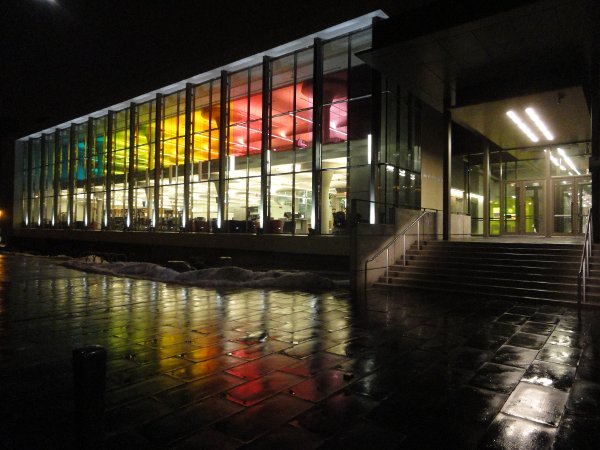
The venue for this DemoCampHamilton event is the Joey and Toby Tanebaum Pavilion at The Art Gallery of Hamilton, one of my favourite venues in the city. If you’ve never been there before, the space itself is beautiful…


A big thanks to sponsors The Art Gallery of Hamilton, Factor[e], Hamilton Economic Development, Innovation Factory, and KPMG for making this evening possible.

Whether you’re a startup in the Greater Hamilton area with a neat new software product, or a garage hacker that’s just built something cool you’d like to show off, you can e-mail democamp@softwarehamilton.com to find out about demoing at DemoCampHamilton7 or a future event.


Sign-up to attend DemoCampHamilton7


Give this former student credit for recognizing a need in retail

May 16, 2012 in Startup

As a professional speaker, I enjoy networking with conference attendees after I deliver a presentation. This often takes place in an exhibit area or trade show where sponsors aim to promote (and sell) their products and services. I will often autograph copies of my book for anyone interested in having a chat with me.

Recently, I have noticed that these ā€œback of the roomā€ book sales require customers to pay in cash. But in many cases, some people want to pay by credit card. Unfortunately, credit card processing is just too technically difficult to administer in such a short-term (small volume) business setting. Clearly, I’m not the only one to have experienced this.

It was summer 2011 and my former MBA student Lorne Lantz was visiting a friend selling jewellery at an artist show. The friend was upset that she had just lost a $300 sale because she couldn’t accept the customer’s (preferred) payment by credit card.

As Lorne walked around the show he noticed that other vendors were also selling expensive items and had no way to accept credit cards either.

Paying by cash seemed to be the only option. After more research Lorne learned that the ability to accept credit card payments through a point of sale machine was out of reach for many small merchants.

Most often, to get a credit card processing machine required at least a $2,000 commitment with the bank and several weeks to get approved.

Fast forward to a few months ago in New York City, the financial capital of the world.

Lorne was about to pitch his hot new mobile payments application, Snappay, to a room full of venture capitalists and banking executives from around the world. To understand why he was chosen out of hundreds of other startups you have to know the tough road Lorne travelled to get there (you can actually see a video of Lorne’s pitch here at www.LorneCanPitch.com).

With 18 years of programming experience, a computer engineering degree and an MBA from the DeGroote School of Business, Lorne felt confident he could build a mobile app that would allow anyone to accept credit card payments … in a Snap.

With guidance from his advisers from Innovation Factory, Lorne went out into the field for weeks and lived the problem with merchants to really understand what’s important to them when accepting money.

A key discovery was that merchants wanted to take their customer’s money as quickly as possible and typing 20 numbers from a credit card into a smart phone was tedious.

So Lorne created a credit card scanning technology that would automatically scan in the credit card number for the merchant.

All a person had to do was hold the credit card in front of the iPhone or iPad. When he put this feature in the hands of merchants, they absolutely loved it.

Trust is a big issue in the mobile payments world, and Snappay found two ways to earn the trust of merchants. First, they ensured that all the money was handled by PayPal, which according to research firm GfK is the most trusted name in the world for mobile payments.

Second, they adjusted their pricing structure so the first month was free. This allowed merchants to try using Snappay with no risk.

Since Lorne’s trip to New York, he’s focused his efforts on constantly improving the product.

With each technological innovation, Snappay becomes an even more attractive solution for mobile merchants around the world. Go ahead and try it yourself by registering at www.snap-pay.com and you can start accepting transactions in minutes.

As Snappay continues to make inroads in the world of mobile credit card processing, I’m sure it (and Lorne) will become another Hamilton success story.


More AppsForHealth, Startup Weekend videos

May 15, 2012 in Community, eHealth, mHealth, Mohawk, Startup, Startup Weekend Hamilton

NewsClipTV (@NewsClipTV1) covered both Startup Weekend Hamilton 2 and AppsForHealth, check out the two videos below!


AppsForHealth


Startup Weekend Hamilton 2


Three books to prime your business instincts

May 14, 2012 in Startup

I received a note from Chris K. recently and he asked me for a list of recommended business books. I thought about it for awhile because business books have dozens and dozens of subcategories including finance, self-help, biographies, sales and marketing among others. Here is a list of three of my favourites.

If you only have 45 minutes to spare (and that includes most of us) give Who Moved My Cheese? a try. Spencer Johnson has one very simple but important message: You better embrace change because it’s inevitable. The story features two mice and two little people and they all live in a maze. The main thrust of the message is that when the cheese finally runs out, the proactive seekers of new opportunities will continue to thrive while the unprepared and lethargic will remain cheeseless. The book is an easy read with a compelling message. Most importantly, it’s easy to share with colleagues and primes the pump for organizational change. You won’t find any innovative frameworks or complex formulas in this text so don’t expect advanced conceptualizations. It’s a simple message in a simple format. That’s it. But it also happens to be the bestselling business book of all time with 20 million copies sold.

One of the most influential books of my management research career is The Fifth Discipline by Peter Senge. Although the book was written 22 years ago, it still resonates with the complex and fast-paced environment we find ourselves in today. Senge presents five essential disciplines of a learning organization. These organizations are quick to learn and therefore fast to adapt. By improving a firm’s processes and learning faster than the competition, Senge argues that organizations will maintain their competitive edge. The five disciplines he describes in the book are: developing individual focus, using mental models, building a shared vision, communicating as a team and systems thinking, which integrates them all. The field of organizational learning is quite rich and spans several decades. Although the book’s popularity was at its peak in the early 1990s, it has resurfaced as a useful framework in a world of fast-paced technological obsolescence.

My third recommendation is from an old friend of mine whom I originally met more than 20 years ago when I worked in the banking industry. David Chilton wrote one of Canada’s most popular books of all time, The Wealthy Barber, back in 1989. The book is about Roy (the barber) who is visited by three people. During the course of their visits, Roy provides financial planning expertise in simple terms. If you’ve never read a financial book in your life, this one is a good place to start. Chilton provides easy to understand commentary on common topics including the 10 per cent solution, wills, life insurance, RSPs, and much more. Fast forward to 2012 and Chilton returns with a so-called wiser update to his bestseller, The Wealthy Barber Returns. The new book is witty and fun. Chilton uses a conversational style to discuss topics such as reverse mortgages, TFSAs and inheritance. The book has a different style from the first one and it is not a sequel, so you can read one or read both.

Another tidbit of related news is that Chilton was recently selected as the newest judge on the CBC show the Dragon’s Den. I look forward to his off-the-cuff commentary. His financial expertise will create another roadblock for any entrepreneurs who hope to hose the Dragons with poorly prepared financials.


Weekly community roundup

May 13, 2012 in Community

It was another active week for bloggers in the community and articles about the community! CBC Hamilton covered Mohawk College’s AppsForHealth conference, Dan Zen released his latest creation Facebook game Primals, and Stephanie McLarty’s blog about being a non-technical founder provides some more useful suggestions to the startups identified in the Factor[e] blog post from a few weeks back about how many Hamilton startups lack a technical co-founder. Check out all the stories and activity below!

A Snapshot of Deloitte’s Technology Trend Predictions for 2012VA Partners (@VAPartners)
A few weeks back I attended the Golden Horseshoe Venture Forum of which we are one of the sponsors…

Being a Non-Technical Founder – Diagnosis & RemedyREfficient (@REfficient)
I started REfficient because I believed there was a better way to manage resources…

Do You Understand the World For Which You are Preparing Students?HeidiSiwak.com (@HeidiSiwak)
I worry sometimes that my colleagues and administrators do not really understand the world for which they are preparing children…

ECONOMIC SUMMIT: Celebrating startupsThe Spectator (@TheSpec)
Hamilton needs to find, nurture and celebrate its ā€œstartup superheroesā€ to create a ā€œcontagiousā€ culture of innovation and entrepreneurship, said a panellist discussing the city’s small business sector…

Explaining Why A Prospective Client Should Choose Ruby on Rails Over PHPFactor[e] (@Factor_e)
In considering certain Web-related RFPs, often we are requested to develop projects in PHP…

Health conference aims to fill app gapCBC Hamilton (@CBCHamilton)
It may seem like there’s an app for everything, but a Hamilton conference organizer says the possibilities for apps in the health field is “huge and growing.”…

Joomla! Hack: How to Display a Page of all K2 Users, Groups and BlogsWeever Apps (@WeeverApps)
It is always a joy discovering new things when building Joomla! web sites…

Letter to Council: Let’s be innovative with transit next bus signsJoeyColeman.ca (@JoeyColeman)
I wrote the following letter to Hamilton City Council today…

May The Fourth etc etcSnakehead Games (@SnakeheadGames)
On this momentous day of days, Snakehead fans, we’re catching you up on this week and the last before we return to process of getting this website up to snuff…

Startup me up!Inovation Factory (@StephShuster)
It’s been a week since the whirlwind of our second Startup Weekend Hamilton, and I’ve gotta say, I’m still on a startup high…

Ticats launch mobile websiteTicats.ca (@Ticats)
The Tiger-Cats launched the mobile version of Ticats.ca today…

Dan Zen (@DanZen) also released a new game called Primals on Facebook where you have to re-arrange a small list of your friends into the order in which they joined Facebook. You can play the game here, and like the Facebook page here.

Nick Bontis (@NickBontis) also gave his views on why we should care about the Facebook IPO in this YouTube clip:


AppsForHealth helps build Ontario’s eHealth community

May 11, 2012 in Academic, Education, eHealth, Hamilton, mHealth, Mohawk

Over the last two days I attended Mohawk College’s AppsForHealth conference. The two day conference first took place last year, with the second occurring May 10-11th of 2012. The first day of the conference was centered around talks, discussion panels, technology showcases and networking for professionals and students alike. The second day of the conference was centered around a student mHealth app design competition where teams of students attempt to design mobile solutions to health care challenges posed by industry sponsors. I was part of the UI design panel that took place during the first day of the conference. The diversity of the community at the event in terms of career backgrounds made for lively and interesting discussions, as nursing students, med school students, family doctors, policy makers and entrepreneurs in the audience connected with a diverse mix of UX and UI design experience on the panel. At one point the following Tweet was briefly brought up on the screen:


It reminded me of articles I’ve come across over the last year like The Jig Is Up: Time to Get Past Facebook and Invent a New Future by Alexis Madrigal (@alexismadrigal) advocating for a new paradigm for startups, and Stop Building Apps and Start Disrupting Industries by Michael Karnjanaprakorn (@mikekarnj) encouraging startups to focus on disrupting industries such as education and healthcare.

I do love Angry Birds, but when I read articles like these and Tweet’s like the above, it makes me think about watching shows like Star Trek growing up, where technology was being used in the future to save lives and drastically improve quality of life. I remember Dr. McCoy thought our health care might as well be from the dark ages! Wherever they found their inspiration, I think that like health care professionals, a lot of engineers and scientists are motivated to do what they do by the possibility of improving people’s lives and creating a better future.


That’s why I’m excited about AppsForHealth and other events across Canada like Hacking Health in Montreal that are working towards increasing and improving the usage of technology in health care. The infrastructure for supporting eHealth and mHealth in terms of internet access, bandwidth and market penetration is now in place, and increasingly capable mobile devices are gaining larger market penetration with lower costs every year. There are great opportunities for using this new technology to improve health in Canada and around the world. And with rising health care costs squeezing government budgets to the point of credit downgrade warnings, technology may provide an alternative solution to the undesirable options of either decreasing services or increasing costs.

You can check out some video coverage of the first day of AppsForHealth here:


The student challenge portion of the event was focused on designing mHealth solutions to challenges posted by non-profit and health care organizations. Students formed teams with a mix of technical and medical skills in the weeks before the event, and were able to access professional mentors during the pre-event mixer and the event itself to improve their solutions. The top three prizes as awarded by the judges were $3000, $2000 and $1000 respectively. Check out the list of challenges below:

  • World Vision Challenge – How might we use mobile technology to support growth monitoring and counselling for children under the age of 5 to improve nutrition and reduce child mortality in developing countries? [link]
  • Electronic Dermatology Consultation – How can mobile technology be used to streamline dermatology consultations in the primary care setting? [link]
  • Mobile Assistance Solution for Youth with Lupus – How could a mobile app increase connectedness with other young people with lupus; track symptoms; remind them to take their medications, include an up-to-date summary of their current status; allow communication of their health status to health care providers; and ide healthy role models in a way that is easy to access, empowering and fun and that won’t require individual feedback to users? [link]
  • Interoperability Between Specialized Data and Generic EHR – How could nurses use technology in a long term care organization to plan, evaluate and document evidence-based care? How could technology enable safe transition of care at shift change? How could technology interoperate with the EHR to improve patient care and capture health outcome data? [link]
  • Mobile Education App for Prostate Cancer – Design an application that will be used to educate men on prostate cancer and provide them with the relevant questions to ask their doctor, based on their profile and disease stage – screening, diagnosis, treatment, living with cancer or remission. [link]
  • Technological Assistance for Children with Chronic Health Conditions – How can technology be used to improve accessibility and ease of use of the new WHO classification system (ICF-CY) to process, collect and display information about the ā€˜disability’ and ā€˜functional’ status of children with chronic health conditions? [link]
  • Mobile Solution to Reduce Mortality Rates in Northern Haiti – How can we use mobile decision support and mobile technology to improve effective institutional delivery referrals to reduce maternal and infant mortality rates in rural communities in Northern Haiti? [link]
  • Leveraging Technology to Assist Seniors with Alternative Living and Long-Term Care – How could mobile technology be used to assist seniors and their families explore and discuss alternate living environments and long-term care options? [link]
  • Medical Records Challenge – How can a chronic disease patient track their relevant symptoms using an application, meanwhile utilizing the live data from this symptom tracker to trigger retrieval or receipt of research- based recommendations, and present those recommendations to both the patient in their PHR and to their health care providers’ EMR? [link]

The winners were announced at the close of the event on Friday afternoon:


1st Place $3,000: Shivani Goyal & Joanne Wong (University of Toronto) for their solution to the youth with lupus challenge supported by SickKids.


2nd Place $2,000: Kent Tsui (McMaster University), Gawain Tang (McMaster University) & Steven D’Costa (Ryerson University). Electronic dermatology consultation challenge by Hamilton Family Health Team.


3rd Place $1,000: Lauren Harris,Teresa Coutu, leanne Fernandez (McMaster University), Adam Carriere, Lina Tirilis (Mohawk College). Supporting seniors with alternative living and long-term care planning challenge, Niagara Haldimand Brant CCAC.


Though I love that it takes place in Hamilton, it was clear during the event that AppsForHealth really has fast become Ontario’s conference for mHealth and eHealth professionals. The keynotes, panelists, experts, technology demonstrators, professionals and students came from Waterloo, London, Toronto, Hamilton and post-secondary institutions from all over Southern Ontario. AppsFoHealth is playing an important community building role for the region. It brings together a group of people with diverse talents and connects them to one another so that together they have the skills required to tackle these challenges. For me personally what I liked the most was being reminded about why I became interested in science and technology to begin with. And I think it was because the challenges themselves were so focused on ideas that would save lives, improve quality of life, and help create that better future for everyone. Organizers Christy Taberner, Duane Bender (@duane_bender) and Mark Casselman (@markcasselman) have put together something really great. I can’t wait to see AppsForHealth 2013.


IF StartUp Spotlight: Our Snappay Founder

May 10, 2012 in Community, IF, Startup

Originally posted on CanuckSEO.com

A new item now on our Hamilton based Innovation Factory website is their publication of local success strories and the lead off one is of our own Snappay Founder, Lorne Lantz!

I am so proud of this young man – and yes, a reminder that I’m also involved with Snappay as their CMO and have been working hard for Lorne to help market Snappay, our mobile POS application that allows a user to charge a customer’s credit cards with no hardware!

And while I’d like to think that I could add something to the Spotlight story – I can’t so here’s a re-post of the whole piece….and if you’d like to see it over at the Innovation Factory site, then just click here!

Lorne Lantz -
Our Snappay Founder

Elevator Pitch

POS systems are way too expensive for most small merchants around the world. Snappay instantly turns any smartphone into a POS machine, no crazy fees, no additional hardware, just sign up and instantly begin accepting payment.

What was the inspiration for your company?

Everyday we make about 10 purchases, that cup of coffee in the morning, walmart runs etc. The way we pay hasn’t caught up to today’s technology. Why do merchants have to rent $50 terminals when they have an iPhone in their pocket? Why do I need a paper receipt when I can have it emailed to me? I’m passionate about payments and Snappay is my first mission to improve the way we buy & sell.

Did you have an ā€˜ah-ha’ moment when you got the idea to start your business?

Last summer I visited my friend, who was selling $200 jewelry pieces at an Artist trade show. She was so desperate to accept credit card payments through PayPal that she setup a table with a laptop, internet stick, printer and generator. As I walked around the show I noticed that the other merchants were all cash only. So I built Snappay.

What is the best part of what you do on a day-to-day basis? The most challenging part?

Everyday is completely new, my industry changes so fast and there’s always a new problem to solve. It’s like I’m playing a video game for the first time and I’m on the advanced level.

The hardest part of my days is maintaining focus on executing my existing plan. There’s so many shiny objects that come by me as entreprenuer, ā€œOh it would be cool to add this feature, oh it would awesome to do a deal with this companyā€, but you gotta stay completely focused on what’s gonna get you the win.

How do you measure success? What is the best recognition you have received?

Success = When you’ve made a positive impact on the world.

I really believe everyone of us has a special talent and we should all use our talents to help improve the world we live in. Peter Parker’s uncle said it best ā€œWith great power, comes great responsibilityā€

Best recognition I’ve gotten was walking up on stage to get my diploma after graduating from High School, Engineering, and MBA….you work so hard for so many years and your family is there to say ā€œWe’re proud of youā€. Winning $10,000 at a big PayPal conference was pretty cool too.

What are your plans for the next year?

Continue improving the way we buy & sell things, and most importantly having fun!

Do you have any advice for other young professionals or students studying to pursue a career in your field?

Any success I have today is because I’ve failed in the past, and learned from those mistakes. Just need to go out, do it and the rest will follow. Surround yourself with people smarter than you, find good mentors, follow your passion, keep innovating, and most importantly Have Fun.

The flow chart below is a rough guideline of how I approach entrepreneurship:

When you were a child, what did you want to be when you grew up?

First a fireman, then a basketball star, then a musician, and then I got a computer and got hooked on making computer games…the rest is history.

What’s your current tech setup?

Android phone, with iPod to test Snappay on. Toshiba laptop with a large monitor….oh and did I mention the car computer?

What websites do you check daily?

www.innovationfactory.ca – to keep up with Hamilton’s innovation scene

www.TechCrunch.com - to keep up to date with all the tech news

www.cbc.ca/international – to watch the news online each night, you can always skip past a story…

www.youtube.com/trends – the best way to see what’s trending in the world

If you were locked in Chapters overnight – what section would we find you in?

The programming section…I don’t have patience to read through a novel, but my attention is captured when I’m given the challenge of solving a problem. Looking up new coding techniques gives me new innovative ways to improve the way we buy and sell stuff.

If you could go to dinner with 5 people in the professional community – dead or alive, who would they be and why?

Dave McClure – He’s like the rebel Venture Capitalist. Over the past years I’ve learned a lot from watching his speeches on youtube. My favourite Dave McClure speech is called ā€œAARRRā€. If I ever meet him in person I’ll be sure to give him my best Captain Sparrow impersonation.

Bill Gates – There’s so much of my life that was influenced by his products. I would love to have a casual conversation with him about where technology is going while integrating examples of how technology got to today.

Shawn Fanning – I would love to hear his whole story of Napster, which is probably my favorite technology that completely disrupted an industry. How is it that one kid writing code in his dorm room eventually led to record stores becoming obsolete, including the iconic Sam the Record Man.

Markus Frind – Guy from Vancouver who started Plenty of Fish. I just want to know what was going on in his head when he built the first ever free dating site. From my research everyone thought he was crazy when he made the site free, and in 2008 he made $10M in revenue just from ads.

Izzy Asper – How did he build a media empire out of the small town of Winnipeg? I’m sure he’d have some amazing stories to share from opening his first TV station to acquiring companies from Conrad Black.

Favourite thing to do in Hamilton?

Bike ride from Westdale to Dundas. There’s a nice path along Cootes drive and stop for a drink at CafĆ© Domestique. Also Tally Ho is pretty awesome.

That’s Lorne….and you should NOT miss a chance to go over to the Snappay website to take a look/see at our video that shows the strength of our app too!


Random Hacks of Kindness returns to Hamilton in June

May 9, 2012 in Community, Open Data, Open Hamilton, Random Hacks of Kindness


Random Hacks of Kindness (@RandomHacks) is a joint initiative from Google, Microsoft, Yahoo, NASA, and the World Bank aimed at creating a volunteer community of innovators who use their skills to make the world a better place by tackling real world problems. The first event took place in November 2009 at the Hacker Dojo in Mountain View, California, one of the projects that came out of that evening was Tweak the Tweet. Tweak the Tweet repurposed tweets with a syntax that allowed them to be used to connect people in need with service providers during disaster situations, it was notably used during the 2010 Haiti earthquake. Since then the event format has spread to cities all over the world.


Hamilton’s first RHoK event took place in December of 2011 at The Staircase (pictured above), you can read the coverage of the event by The Spectator here. The participants worked on building software that would allow you to send a text with a bus stop number, and receive a text back telling you when your next bus should arrive. I was able to attend the opening of the event and the weekend itself for a few hours. The passion in the room was wonderful, and I noticed in particular that the participants seemed to be learning new skills as they worked on the project together.


Sign up for the June 2nd Random Hacks of Kindness here!


The event organizer is Joey Coleman (@JoeyColeman), project lead of Open Hamilton (@OpenHamilton). With contributions from great local developers like Gavin Schulz (@GSMaverick) the Open Hamilton group has been able to create apps like Skate Hamilton to allow citizens to find out where they can skate using a very friendly user interface. Whether it’s local transit signs or representing Hamilton at the Creative Commons Salon on Open Data (see video below), Joey himself has been a tireless advocate for the usage of open data and open source for social good:


Hamilton is one of the smallest communities to host a Random Hacks of Kindness event. Though we may be a relatively smaller tech community, being able to punch above our weight and conduct a noteworthy event such as this grows and strengthens our community as participants collaboratively share, learn and build. Communities like Ottawa that have contests such as Apps4Ottawa give the development community and their good work a great spotlight. Random Hacks of Kindness lets us show the outside world what we can do here in Hamilton. I encourage anyone in the area interested in building apps and technology for social good to participate in the June 2nd Random Hacks of Kindness.


The medium may be the message, but the message still applies

May 8, 2012 in Communications, Marketing

Last September, I wrote a blog titled ā€œThe Medium is the Messageā€ and how it applies to our social media efforts. As mentioned in my previous blog, McLuhan’s theory was not made for the internet and social media, however, his theory applies none-the-less. When stating ā€œThe medium is the messageā€, McLuhan believed that it was not what we said, but the way we said it that mattered most. Although McLuhan was right in saying that the way we send our message is important, we cannot neglect the message itself; this is where the importance of copywriting comes in.

Copywriting is essentially the value of your company, its services and products in writing. In order to ensure you accurately portray your brand to your customers, prospects and even competitors, here are a few tips to get you on your way:

  1. Assign someone to do the task. Startups and growing organizations suffer from inadequate resources to get things completed. Find the person in your company that handles the majority (or all) of your Marketing efforts. This person will have some prior insight into how your company should be communicating with your audience.
  2. Prep yourself before writing. We won’t all be superstar copywriters at first, but a bit of help can lead to success. Attend webinars, read whitepapers and even take a copywriter in your neighbourhood out for a coffee to pick their brain for an hour.
  3. Make a copywriting plan for each medium. Put a copywriting plan in place for your Social Media outlets, Whitepapers, Email Newsletters and Website. Having copywrite for each medium put into a plan and templated will make it easier to pass it on throughout your company. It will also serve as a back-up source of information in case any of your employees need a refresher.
  4. Keep a content calendar. A content calendar can be done on something as simple as Microsoft Excel, or it can be done on Google Docs. Either way you choose to track this information, make sure your entire team is on the same page. This way, the timeline and expectations for each source will be known by all your employees. Mark Evans speaks also speaks on the importance of content marketing and how it applies to our Marketing efforts; check out his website for more information.

If you’re looking for help on your copywriting efforts, or simply looking for resources on Copywriting techniques, reach out to myself or sign up for our monthly newsletter filled with great information, suggested readings and events on Sales and Marketing.


GHGT program educates Hamilton youth about tech, recycling

May 7, 2012 in Community, Education

Golden Horseshoe Green Tech (@GHGTrecycling) is a local non-profit organization, one of their purposes is to create alternative education opportunities for youth in the Hamilton community. A recent program of GHGT involved Hamilton students in grade 11 and 12 using e-waste to build robots! NewsClipTV (@NewsClipTV1) was there to cover the activity, check it out below. That’s a pretty cool robot if you ask me, especially considering it’s made out of recycled parts!


And here is the footage of the e-waste collection process itself at the Dixie Mall in Mississauga, with GHGT president Ali Shahidi and about 15-20 volunteers…


Thanks to Michael Canton (@valleytownmedia) for making me aware of this, it’s yet another great tech-related initiative in Hamilton!